
2025 Annual Report
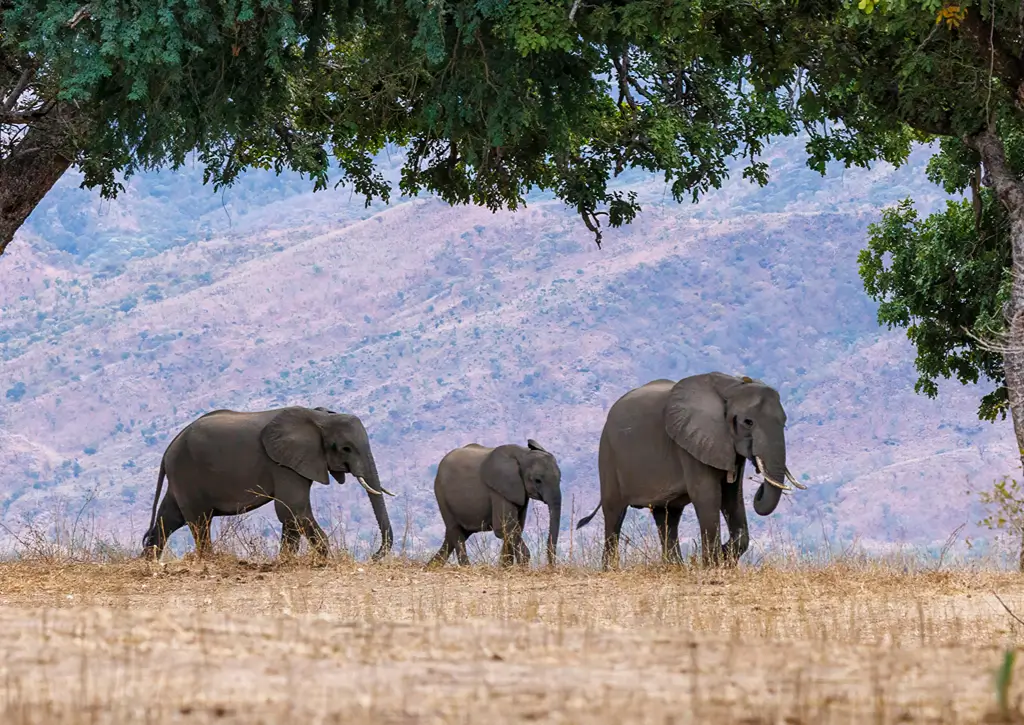
No elephants have been poached in the National Park since 2019!
Wildlife and Landscape Protection
With permission from Zimparks, we began collaring iconic elephants in 2018. GPS collars provide protection when the big bulls leave the national park and enter adjacent hunting areas. During 2025, all collared elephants that moved into adjacent hunting concessions were safeguarded from legal hunters, ensuring their continued survival.
Working with Zimparks, we resumed anti-poaching patrols on the Zambezi River and deployed camera traps along the southern boundary to monitor known illegal entry points and strengthen surveillance. Supported by our drivers and vehicles, Zimparks rangers arrested several illegal gold panners operating in wilderness areas adjacent to the park and intercepted a truck transporting firewood without authorization.
Conservation Education and Youth Engagement
Community based education continued to be a cornerstone of our conservation success. More than 700 children participated in conservation clubs led by BSU Community Liaison and Educator Sophia Maseba, who delivered 144 conservation lessons across 24 schools. These efforts were complemented by a large sports gala and a wildlife quiz day, both of which strengthened environmental awareness among local youth and the community at large. Additionally, we paid for transportation, tuition, lodging, meals, and T-shirts for 90 children from park boundary communities to attend a weeklong hands-on conservation education camp.
Human-Wildlife Coexistence along Park Boundaries

Our human-wildlife coexistence initiatives expanded through awareness training and conflict-mitigation strategies. We safely captured a leopard in a villager’s garden and relocated her deep into the park. Our elephant deterrent methods—including chili bricks, metal reflectors, and fireworks—reduced crop raiding. Through a partnership with the Utariri Programme, 3 boundary communities gained access to piped water, reducing pressure to encroach on protected land. We built a new roof on the health clinic that serves residents along the southern boundary.